
Trauma is an emotional, psychological, and physiological response to a disturbing or terrible event.
Anxiety and depressive symptoms may show up as secondary conditions with underlying trauma sometimes never being addressed. Noticing this is the first step to healing.
Trauma can be the norm not the exception. Your nervous system will naturally choose a familiar hell over an unfamiliar heaven because it is what you are used to.
What are the symptoms associated with trauma?
It is important to keep in mind that an amount of these symptoms are normal and natural as part of a nervous system response and usually pass within a small amount of time.
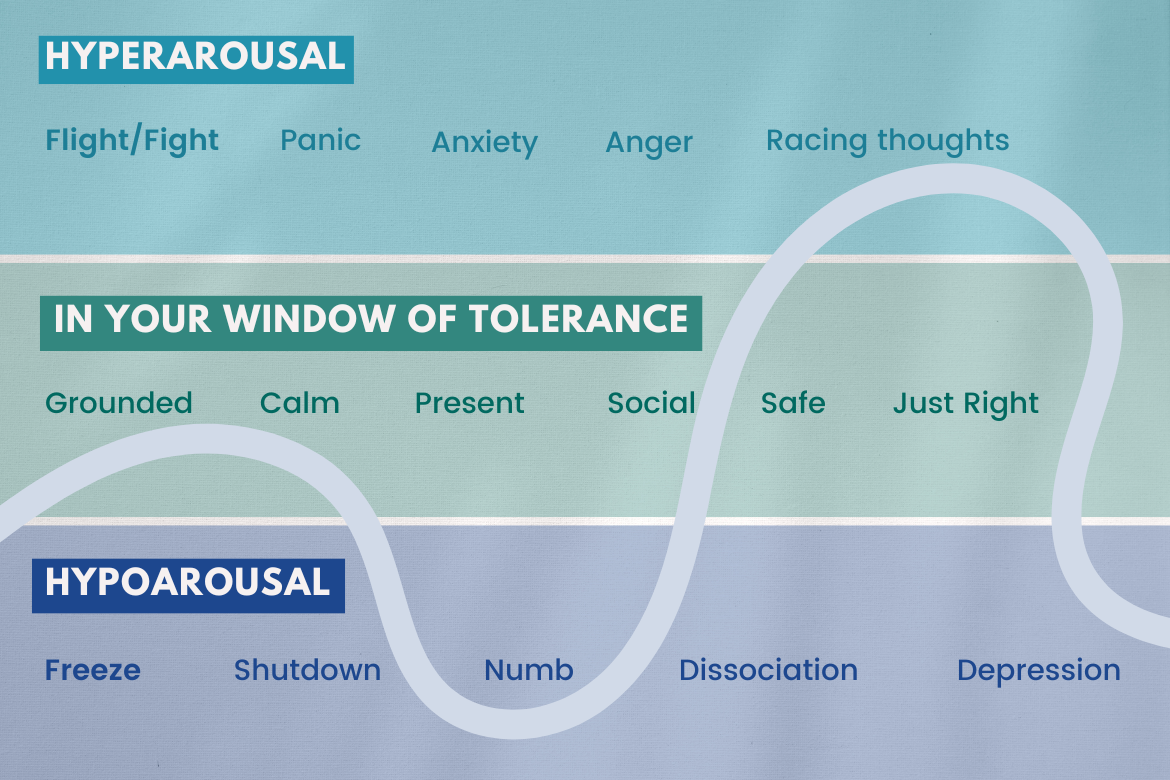
The window of tolerance is the optimal state of psychological arousal. Those that have had traumatic experiences often have a smaller window of tolerance. In therapy we want to work to increase the window of tolerance.
Sometimes our automatic nervous system warns us of a threat creating a fight or flight response called hyper-arousal, this is the stress, panic, anxiety, anger, racing heartbeat, racing thoughts. While other times we are in a state of freeze with hypo-arousal, which is feeling numb, shut down, lonely , disconnected, feeling deep shame. When we do not process this response all the way through it can stay trapped in the nervous system, leaving our window of tolerance for triggering occurrences much smaller.
Yes there are different types of trauma. It is important to keep in mind that sometimes you do not need a diagnosis to manage symptoms associated with trauma such as anxiety, depression, and relational concerns, but this is a decision made between yourself and your doctor.
Post-Traumatic Stress Disorder (PTSD)
Develops from a traumatizing/distressing event with intrusive symptoms, avoidant symptoms, cognitive and mood changes, increased arousal and reactivity lasting a month or more.
Acute Stress Disorder
Similar symptoms to PTSD, lasting temporarily after a traumatic event, are the body's natural response to distressing events.
Complex Trauma
This stems from life-long trauma stemming from childhood or repeated abuse in any part of life that intertwines into the foundation of the psyche and forms deep attachment wounds. Sometimes this comes from being in unstable high conflict households that are unpredictable. Complex trauma, unlike PTSD, comes from repeated experiences over time.
Complex trauma can show up as:
This is the body and mind's way of keeping ourselves safe and ensuring survival when we detect something that is not safe to us. This is a normal bodily reaction and healing is possible.
Intergenerational Trauma
It is important to keep in mind that an amount of these symptoms are normal and natural as part of a nervous system response and usually pass within a small amount of time.
(thought to be epigenetic-within our DNA).
Trauma can be inescapable as systemically institutions were not built to serve everyone equally and often oppress BIPOC, disabled, 2SLGBTQIA+ folk and women. It is imperative that each client's entire self is seen and heard within sessions through exploring micro to macro levels systems that continue to discriminate and increase trauma. These include being aware of:
Reoccurring traumatization by present events and the future impacts on a group such as policy changes or barriers that may further oppress groups.
It is important to recognize the impacts of intergenerational trauma while also remembering the strengths and resiliency all identities hold.
The easy answer is yes, the more complicated answer is that healing is not linear and can take time. It is important to celebrate each success and be kind to yourself if a setback happens- which is an expected part of the healing journey!
Healing from trauma is a slow and steady journey. The first part of healing is through safety and stabilization, which might look like identifying physical needs and emotional needs, learning coping and emotional regulation skills to increase the ‘window of tolerance’, developing a routine that works for you, and building trust within the therapy room.
Once you feel comfortable and stable, we then want to remember and mourn, processing memories, while grieving what we lost. This can look like writing down the trauma, witnessing and noticing, or using therapies like EMDR to desensitize the bodily and emotional activation surrounding the trauma.
Finally we want to reconnect back into the world in a meaningful way. Use developed coping strategies to navigate challenges in the future, increase social connections, identify client values and reflect on what is meaningful to the client, identify joyful activities and develop a sense of identity other than victim.
This is a flexible approach and it is important to keep in mind that sometimes we are in the ‘safety’ and stabilization phase longer than the others, or maybe we have to go back to it because processing can be emotionally overwhelming. There is no right or wrong way to do this, going back a step does not mean losing progress, it shows that you are aware and can identify when you need support instead of plowing forward.
Many therapies support healing from trauma. It may look like talk based therapy, such as acceptance and commitment therapy (ACT), psychodynamic, and dialectical behavioural therapy (DBT) as talking about trauma can be a cathartic effective way to process it, with incorporated grounding strategies and coping skills.
Another approach that is tailored for processing trauma and symptoms related to it is eye movement desensitization reprocessing (EMDR) to process traumatic memories. Virtual EMDR can be done safely online and works to shift stuck feelings in the body allowing the neural pathways in the brain to naturally heal.
Book a free consultation to ask more questions about what the healing journey can look like for you.